
A child takes a toy.
Another child immediately grabs it back.
Someone says something insulting.
The response comes before the thinking.
A student gets frustrated with an assignment and quits.
A sibling pushes a button that they have pushed a thousand times before, and exactly the expected explosion follows.
Adults do versions of these things too.
There is often a tiny space between something happening to us and what we choose to do next. Learning to make that space just a little larger may be one of the most valuable skills a young person can develop.
Psychologists generally place abilities such as impulse control, attention, emotional regulation, working memory, and cognitive flexibility under the broader umbrella of self-regulation and executive function.
They allow us to do something surprisingly difficult:
Choose a response rather than simply have a reaction.
Martial arts can provide an interesting environment in which to practice this.
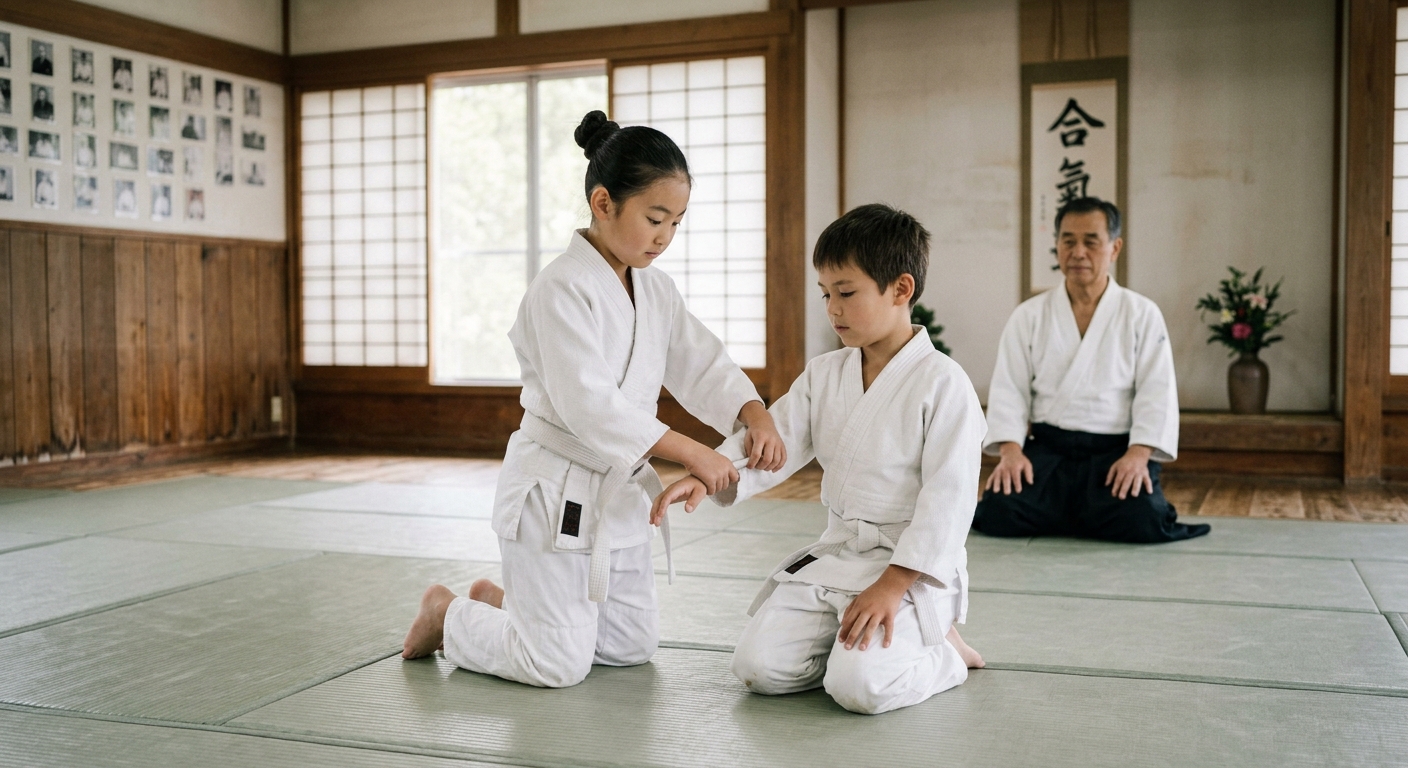
Imagine a child learning a technique with a partner.
They must listen to an instruction.
Remember several steps.
Control their body.
Pay attention to their partner.
Notice when something isn’t working.
Manage frustration.
Make an adjustment.
Try again.
And do all of that while someone else is moving.
That is a very different experience from simply being told, “Pay attention.”
 Research into youth martial arts is still developing, and we should be careful about making magical claims. Martial arts do not automatically transform every child who walks through a dojo door.
In fact, a recent systematic review found that outcomes can vary considerably depending on the martial art, how the program is structured, the instructors, and the educational environment.
That is an important point.
The environment matters.
A good youth martial arts class isn’t valuable merely because children kick, throw, grapple, or perform techniques.
The deeper value may come from how those activities are taught.
Do students learn to stop when a partner taps?
Do they learn that being stronger doesn’t give them permission to hurt someone?
Can they lose a game without falling apart?
Can they win without humiliating someone else?
Can they receive correction without interpreting it as failure?
Can they try something difficult several times before succeeding?
Research outside martial arts also shows a positive relationship between children’s motor competence and executive functions such as inhibition, working memory, and cognitive flexibility, although researchers continue to study exactly how those relationships work.
For parents, perhaps the most useful question isn’t:
“Will martial arts make my child more disciplined?”
A better question might be:
“What kinds of decisions is my child repeatedly practicing here?”
Because every class contains hundreds of small decisions.
Listen or talk.
Quit or try again.
Lose control or regain it.
Use too much force or adjust.
Blame a partner or solve the problem.
React immediately or pause.
No single class changes a child.
But thousands of small decisions practiced over months and years have a way of becoming habits.
And sometimes the most important thing a young martial artist learns isn’t how quickly to move.
It’s when not to.