
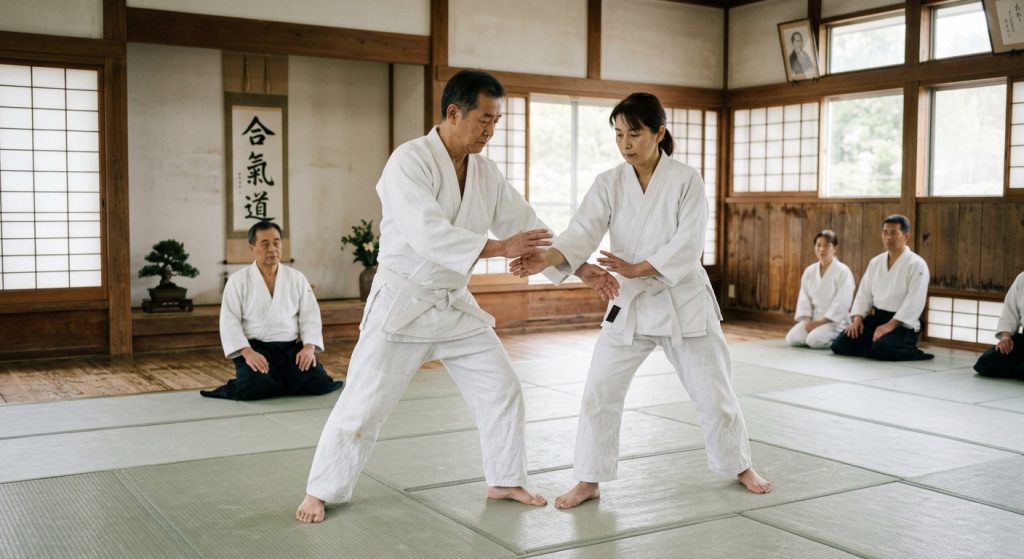
Every martial artist eventually encounters an uncomfortable moment.
You know the technique.
You’ve practiced it dozens—or hundreds—of times.
Then your partner grabs differently, moves unexpectedly, resists, changes direction…
…and nothing happens.
The technique doesn’t work.
What happens next may tell us more about our martial arts training than the technique itself.
One response is to blame the partner.
“You aren’t attacking correctly.”
“You’re resisting.”
“That’s not how you’re supposed to grab.”
Sometimes those observations are legitimate. Structured practice requires partners to perform specific roles so that particular skills can be isolated and learned safely.
But eventually another possibility has to be considered:
Maybe what I am doing simply isn’t working.
That is where martial arts becomes an exercise in critical thinking.
The Technique Is Not the Goal
 When beginners learn martial arts, techniques often feel like answers.
Someone grabs here.
I move there.
My hand goes here.
They fall there.
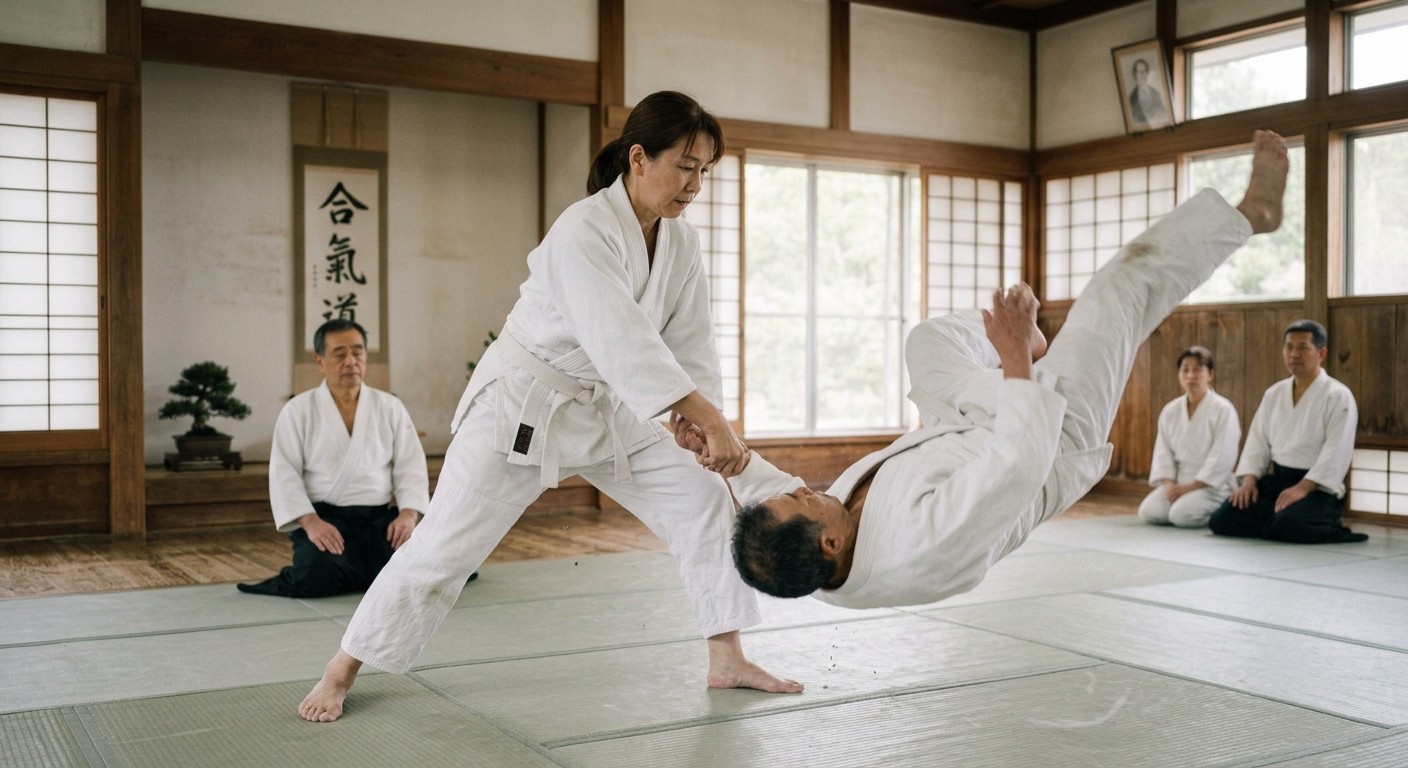
But techniques are better understood as experiments.
Each one teaches something about structure, balance, distance, timing, leverage, movement, or human reaction.
The exact sequence is useful because it allows us to repeatedly explore those ideas.
The danger comes when we confuse memorizing the experiment with understanding the principle.
Consider balance.
If I truly understand how another person’s balance is being affected, I may recognize several possible ways to continue.
If I only remember where my left foot is supposed to go, an unexpected movement may cause the entire technique to collapse.
That failure isn’t necessarily bad.
It is information.
Your Partner Is Giving You Data
One of the most valuable things about training with another person is that another person is inconvenient.
They aren’t perfectly predictable.
Their body is different from yours.
Their timing changes.
Their balance is different.
Their arms may be longer.
They may be stronger, smaller, faster, stiffer, more relaxed, experienced, or completely new.
That means your partner constantly gives you feedback.
If you are using unnecessary strength, you may feel it.
If your position is poor, you may discover it.
If you misunderstood the direction of the attack, the technique may tell you immediately.
This only works, however, when we are willing to listen.
Don’t Prove the Technique. Investigate It.
There is a subtle but important difference between practicing to prove that a technique works and practicing to discover why it works.
The first mindset protects our assumptions.
The second tests them.
Good martial arts training should gradually introduce uncertainty. Cooperative practice allows us to learn safely. Increased variation, resistance, different partners, different attacks, and eventually more spontaneous situations allow us to test what we have learned.
Neither extreme is particularly useful.
Completely compliant practice can create an illusion of effectiveness.
Completely resistant practice can prevent beginners from ever learning the movement in the first place.
The challenge is finding the appropriate level of difficulty for the lesson being studied.
Failure Can Be the Lesson
There is another reason this matters.
Outside the dojo, problems rarely arrive exactly as rehearsed.
People misunderstand us.
Plans change.
Assumptions prove wrong.
Something that worked previously suddenly doesn’t.
In those moments we have the same choice we have on the mat.
Force the answer we expected?
Or pay attention to what is actually happening?
Aikido asks practitioners to become sensitive to movement, direction, timing, distance, and change. The art’s founder, Morihei Ueshiba, ultimately emphasized harmony rather than simply overpowering another person, a distinction still emphasized by the Aikikai today.
Harmony in this sense shouldn’t be confused with passivity.
It requires awareness.
And awareness sometimes begins with three extremely useful words:
This isn’t working.
Then comes the question that can transform both martial arts practice and everyday problem solving:
Why?